
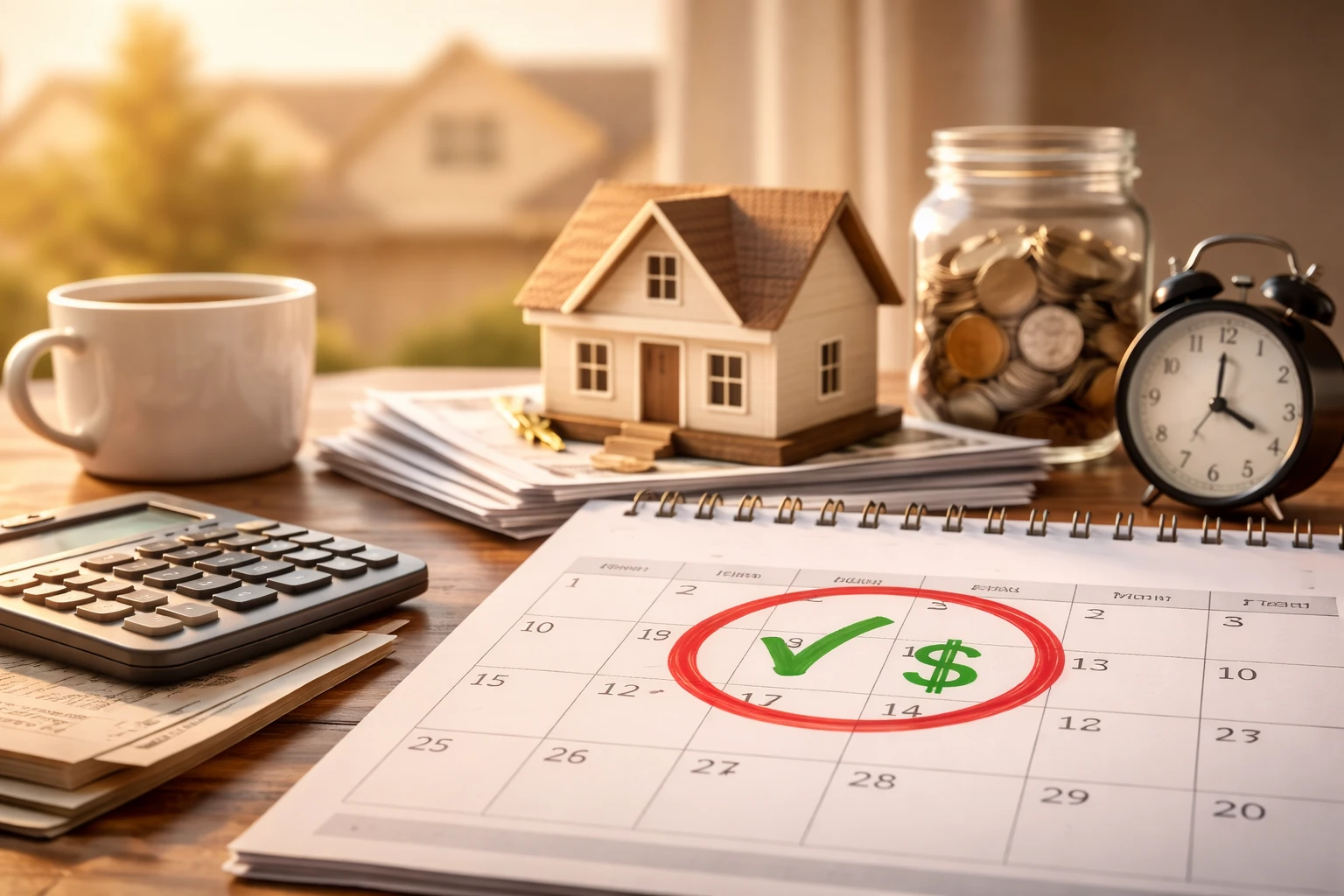
A mortgage with a lower interest rate should be the obvious choice. Yet many homeowners willingly pay more just to keep their monthly payment predictable — because financial comfort often matters more than mathematical savings.
Ask most people what they want from a mortgage, and they’ll say “the lowest rate.” But ask homeowners what actually keeps them comfortable long term, and you’ll hear something different.
They want their payment to stay the same. In observing how households evaluate mortgage choices across different market cycles, one pattern shows up repeatedly: people are far more sensitive to payment volatility than to rate headlines.
Not low. Not optimized. Just predictable.
In 2026, that preference has quietly reshaped how Americans think about housing finance. Rates still matter, but stability matters more — especially in a world where everything else feels variable.
The Emotional Cost of Uncertainty Is Higher Than Most People Realize
Housing is not a spreadsheet expense. It’s the foundation of household security.
When monthly payments fluctuate, even modest changes can feel disruptive. Families don’t just recalculate budgets — they recalibrate lifestyles. Spending tightens. Risk tolerance drops. Long-term planning shrinks.
That’s why variable or short-term adjustable loans, even when cheaper upfront, rarely outperform fixed structures in real life outcomes. People don’t optimize for the lowest theoretical cost. They optimize for emotional safety.
Predictability reduces cognitive load. And in financial decisions that last decades, that matters more than small numerical advantages.
Low Rates Lose Their Appeal When Payments Aren’t Stable
A 5.5% adjustable mortgage can look better than a 6.5% fixed loan on paper. But when borrowers consider what happens if rates rise — and payments reset — the appeal fades quickly.
It’s not the average cost people fear. It’s the worst-case month. A payment that can jump by a few hundred dollars may look manageable in projections, but it feels very different when it coincides with a job transition or an unexpected expense.
Households tend to plan around downside scenarios, not optimistic ones. They ask:
• Can we still afford this if income dips?
• What happens if expenses rise unexpectedly?
• How much room do we need to breathe?
Fixed payments answer those questions upfront. Variable payments postpone them — which feels cheaper, but rarely feels safer.
Why Payment Stability Outperforms Rate Optimization Over Time
Many borrowers assume that refinancing later will solve any rate disadvantage according to the Federal Reserve.. But refinancing depends on future conditions: income stability, home values, credit markets, and transaction costs.
None of those are guaranteed.
What is guaranteed is the payment on a fixed-rate loan.
Over time, that certainty compounds. As incomes rise, fixed payments shrink in relative burden. Budgets loosen. Risk tolerance increases. Households regain optionality — not because rates fell, but because expenses stayed flat while earnings didn’t.
That dynamic rarely appears in mortgage calculators. But it dominates lived financial experience.
The Behavioral Gap Between What’s “Cheapest” and What’s Best
Economists often assume consumers optimize cost. In housing, they optimize survivability.
Most people don’t want the cheapest mortgage. They want the mortgage they can carry through layoffs, medical expenses, relocation, and economic cycles without disruption. They want something boring — something that doesn’t surprise them.
This explains why adjustable-rate mortgages, despite occasional surges, never dominate the U.S. market long term. They require confidence not just in rates, but in life stability. And life rarely cooperates that neatly.
Predictable payments remove one variable from an already complex system.
Why This Preference Strengthened After the Pandemic
The pandemic years changed how households think about risk.
Income volatility, job insecurity, inflation spikes, and policy shifts reminded people that macro stability can disappear quickly. In that environment, financial structures that reduce exposure — even at a cost — become more attractive.
Fixed mortgages didn’t just offer low rates during that period. They offered psychological insulation. Families could absorb other shocks because housing costs remained constant.
Once people experience that level of financial calm, they rarely want to give it up.
How Payment Predictability Shapes Housing Decisions
Stable payments influence not just loan choices, but life choices.
Homeowners stay longer. Families invest more in renovations instead of upgrades. Career moves are evaluated through a housing lens. Risk tolerance in other areas — entrepreneurship, education, long-term investing — often rises because the household’s largest expense is under control.
In this way, predictable payments act less like a financing feature and more like a behavioral foundation.
They reduce friction across decisions that have nothing to do with mortgages — but everything to do with stability.
Why This Explains the Popularity of 30-Year Fixed Mortgages
The dominance of 30-year fixed loans isn’t accidental. It reflects a cultural preference for financial certainty over theoretical optimization.
That preference for payment stability also explains why most Americans accept 30-year mortgages, even when shorter-term loans offer lower rates.
Borrowers are willing to pay a small premium in interest to eliminate rate risk entirely. That tradeoff doesn’t look optimal in calculators. But in real life, it often is.
When people know their housing payment won’t change for decades, they stop worrying about housing. And that mental freedom has real economic value — even if it’s hard to quantify.
The Quiet Shift From Chasing Rates to Protecting Cash Flow
In today’s market, many borrowers no longer ask, “What’s the lowest rate I can get?”
They ask:
- What payment can I live with long term?
- How much volatility can my household absorb?
- What structure lets me sleep at night?
Those questions reflect maturity — not risk aversion.
It’s a recognition that financial success isn’t about extracting every basis point. It’s about building systems that hold under pressure.
And predictable payments do that better than almost anything else in housing finance.
Final Thought
Low interest rates feel exciting. Predictable payments feel boring.
But boring scales better across decades.
In housing, the best financial structures aren’t the ones that win in perfect scenarios. They’re the ones that survive imperfect ones. That’s why, year after year, borrowers continue to favor fixed payments — even when cheaper alternatives exist.
Not because they misunderstand math. But because they understand life.